





















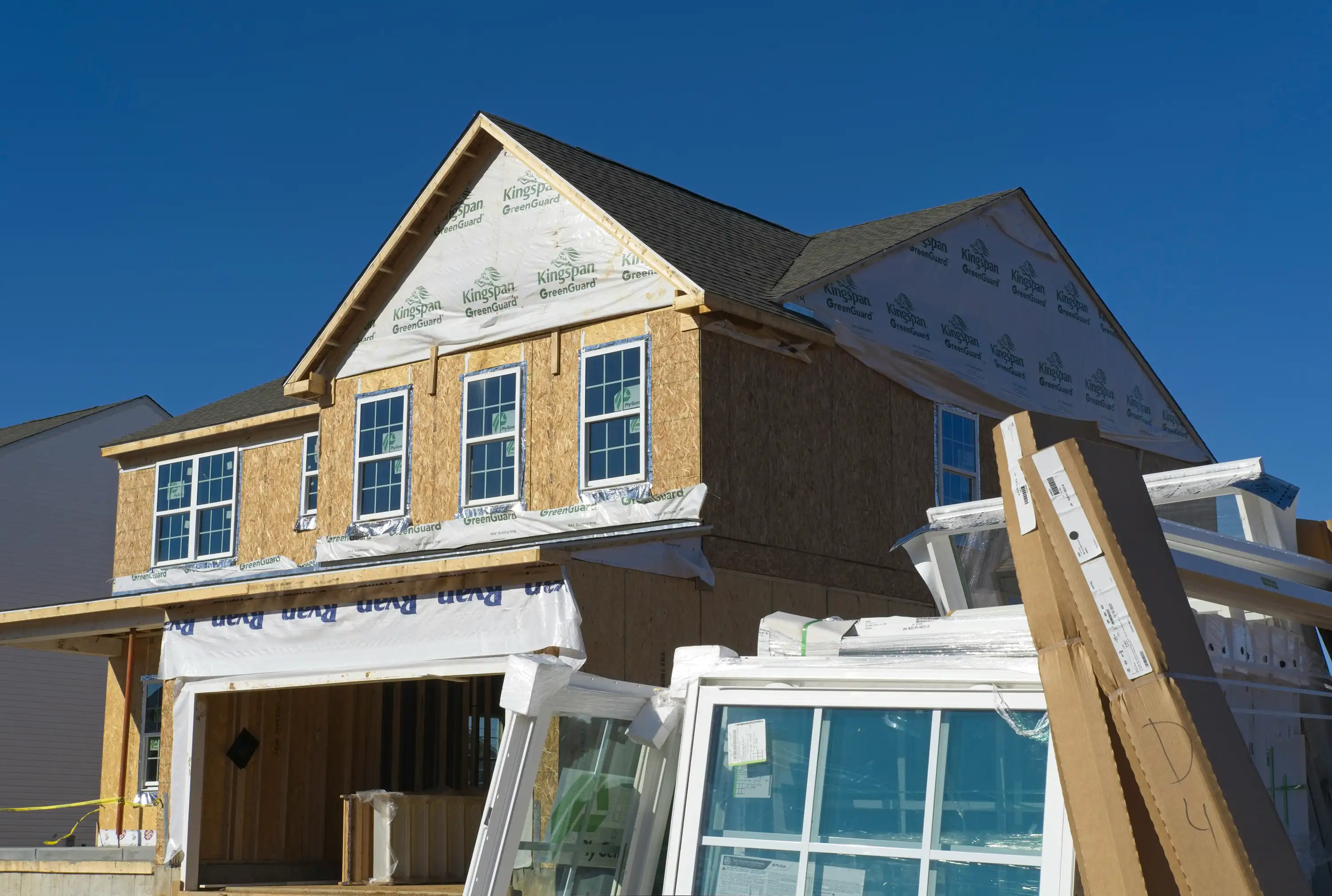
Sometimes the perfect replacement property does not exist yet. An investor might want to build a new facility from the ground up, or take an existing building and complete significant renovations, using exchange proceeds to fund the work. This is possible through a construction 1031 exchange, also known as an improvement exchange or build-to-suit exchange, but it is one of the more complex structures available under Section 1031 and it comes with a hard deadline that does not bend for construction delays. Understanding how the structure works, who holds title during construction, and how to budget realistically for the 180-day window is essential before committing to this strategy.
Because improvement exchanges involve more moving parts than a standard exchange, it is worth talking with Aspen Exchange early, ideally before you even go under contract to sell your relinquished property.
What Is an Improvement or Construction Exchange?
In a standard 1031 exchange, an investor sells relinquished property and buys replacement property that already exists in its final form. A construction exchange, by contrast, allows exchange proceeds to be used to build new improvements or complete renovations on the replacement property before the investor takes title, with the completed improvements counting toward the value needed to fully defer gain. This can be useful when:
- An investor wants to move into a build-to-suit property tailored to a specific tenant or use, rather than an off-the-shelf building
- The available inventory of suitable replacement properties is limited, and new construction is the more realistic option
- A property needs substantial renovation or expansion to be worth an amount equal to or greater than the relinquished property, satisfying the exchange value requirements
- An investor already owns land or a partially built property and wants to use exchange funds to complete construction on it
The Role of the Exchange Accommodation Titleholder
The mechanism that makes a construction exchange work is the Exchange Accommodation Titleholder, commonly called an EAT. Because the taxpayer cannot hold title to the replacement property while construction is being funded with exchange proceeds (doing so would generally disqualify the exchange), an EAT is used to hold legal title to the replacement property during the construction period. This structure, generally referred to as a parking arrangement, allows improvements to be built while the property is technically parked with the EAT rather than owned directly by the taxpayer.
The general sequence of a construction exchange looks like this:
- The relinquished property is sold and proceeds are transferred to the qualified intermediary, as in a standard exchange
- The EAT acquires and holds title to the replacement property, often using funds advanced through the qualified intermediary along with financing if needed
- Exchange proceeds are used to pay for construction, materials, and labor while the EAT holds title
- The investor formally identifies the replacement property, including the improvements being constructed, within the 45-day identification window
- Before the 180-day deadline, title to the improved replacement property is transferred from the EAT to the investor, completing the exchange
The value of the property for exchange purposes is generally measured as of the date title transfers to the investor, which means the finished value, including whatever improvements have been completed by that date, is what counts toward satisfying the exchange requirements. Any construction that is not finished by day 180 generally does not count toward the exchange value, even if it is completed later using the investor’s own funds.
Why the 180-Day Clock Is the Real Constraint
This is the single most important fact about construction exchanges: the 180-day exchange window does not pause, extend, or adjust for construction delays. Whatever value has been added to the property by day 180 is what counts. If a contractor falls behind schedule, permitting takes longer than expected, or weather delays push completion past the deadline, the investor is generally stuck with whatever has actually been built, not what was planned. This makes construction exchanges fundamentally different from a standard exchange, where the main risk is finding and closing on an existing property. Here, the risk is compressed into a live construction project running against an unmovable federal tax deadline. For background on how the exchange clock works generally, see this explanation of the 1031 exchange 45-day rule, which runs concurrently with the 180-day window discussed here.
Because of this constraint, construction exchanges work best for projects that can realistically be completed, or substantially completed, within roughly five to six months from the day the relinquished property closes. Ground-up construction on a large commercial building rarely fits that timeline. Smaller renovation or improvement projects, or construction that has already been partially planned and permitted before the exchange begins, are much more realistic candidates.
Budgeting and Contractor Timeline Risk
Because there is no extension for construction delays, budgeting and scheduling discipline matter enormously in this type of exchange. Investors considering a construction exchange generally need to plan around several risk factors:
- Permitting timelines. Entitlement and permitting can eat significantly into the 180-day window before a single shovel goes into the ground, so pre-permitted or already-entitled projects are far lower risk
- Contractor availability and scheduling. A contractor who cannot start immediately, or who has competing projects, can quickly consume weeks of the exchange timeline
- Supply chain and material lead times. Delays in sourcing key materials or equipment can stall a project regardless of how efficient the construction crew is
- Change orders and scope creep. Any mid-project changes to the construction plan generally need to be evaluated against how much time is left before day 180
- Draw schedules and lender coordination. If financing is involved alongside exchange proceeds, the disbursement schedule needs to move at the same pace as construction, which requires close coordination among the EAT, the lender, and the qualified intermediary
Given these risks, investors and their advisors generally build in a buffer, targeting substantial completion well before day 180 rather than planning for a project that finishes exactly on the deadline. A conservative construction schedule with room for delay is almost always safer than an aggressive one that leaves no margin.
How This Differs From a Standard Exchange
Beyond the use of an EAT, construction exchanges differ from standard exchanges in several practical ways:
- Coordination is more intensive, generally involving the qualified intermediary, the EAT, a construction lender if applicable, a general contractor, and the investor’s legal and tax advisors all working from the same timeline
- Costs are typically higher than a standard exchange because of the added legal, administrative, and EAT structuring work involved
- Documentation requirements are more extensive, since the IRS safe harbor for parking arrangements requires specific agreements and recordkeeping to support the structure
- The exchange value calculation is based on what has actually been built by day 180, not the projected finished value of the property, which requires careful appraisal and cost tracking throughout construction
Given this added complexity, construction exchanges are generally best suited to experienced investors working with a qualified intermediary who has handled improvement exchanges before, alongside legal counsel who can properly structure the EAT arrangement.
Frequently Asked Questions
What is an Exchange Accommodation Titleholder?
An Exchange Accommodation Titleholder, or EAT, is an entity that holds legal title to replacement property on a temporary basis while construction or improvements are completed using exchange proceeds, allowing the investor to avoid taking title directly during that period.
Can I finish construction after the 180-day exchange period ends?
You can continue construction after day 180, but only the value of improvements completed by that date generally counts toward the exchange. Work finished afterward is typically funded with the investor’s own money and does not add to the deferred exchange value.
Is a construction exchange more expensive than a standard 1031 exchange?
Generally, yes. The added legal structuring, EAT fees, and coordination required make construction exchanges more costly than a standard exchange, which is a factor investors should weigh against the benefit of a customized replacement property.
How much construction can realistically be completed in 180 days?
It depends heavily on the project, but ground-up construction on a large building rarely fits comfortably in the window once permitting, contractor mobilization, and material lead times are factored in. Smaller renovations or projects that are already entitled tend to be more realistic candidates.
Do I need a special lender for a construction exchange?
Not necessarily a special lender, but the lender does need to be willing to work within the parking arrangement structure and coordinate disbursements with the EAT and qualified intermediary, so early conversations with the lender are important.
Plan Your Construction Exchange Before You Sell
Construction and build-to-suit exchanges offer real flexibility for investors who need a customized replacement property, but the fixed 180-day deadline leaves little room for error. Careful planning around permitting, contractor scheduling, and EAT coordination before your relinquished property closes is the difference between a successful improvement exchange and a rushed, incomplete one. Contact Aspen Exchange to discuss whether a construction exchange fits your timeline and project scope.
This article is educational information, not tax, legal, or investment advice. Consult your own qualified advisors regarding your transaction.